
What Is a Korean Lash Lift? An Introduction to Modern Lash Techniques
Posted by Elleebana on 15th Sep 2025
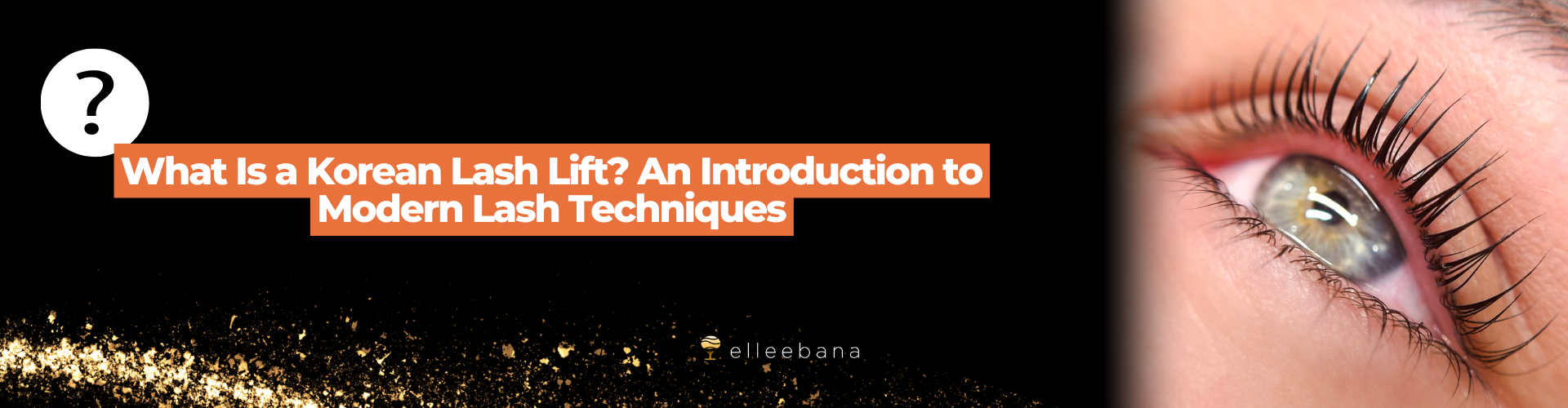
Lash lifting has come a long way from its early beginnings. Today, new techniques like the Korean Lash Lift are changing the way artists approach lash styling, offering greater precision, healthier results, and more tailored looks for clients.
The Korean Lash Lift Explained
The Korean Lash Lift is an advanced method originally developed in Korea to address some of the most common lash challenges: downward-facing, coarse, or stubborn lashes.
Here’s how it works:
- A flat shield is placed just above the lash line.
- A lifting lotion (mixed with a viscosity controller to prevent slipping) is applied, softening the lashes while they’re gently stretched upward.
- Cling film may be used to keep the lashes in place during softening.
- Once pliable, the lashes are then wrapped onto a curved shield to set their final curl with precision.
This step-by-step process helps lashes that are resistant to traditional lifts hold a longer-lasting shape.
It’s especially effective for Asian eye shapes, where lashes often grow straight or downwards.
Best suited for: thick, coarse, downward-growing lashes
Less suitable for: weak, fragile, or naturally curly lashes
The Freestyle Method
The Freestyle Lash Lift changes the traditional order of a lift. Instead of attaching lashes to a shield with adhesive first, the lifting lotion is applied directly to the natural lashes while they rest on an under-eye pad or reverse shield.
This softens the lashes before wrapping, making them more pliable and easier to manipulate. Once softened, they can be lifted onto a shield and shaped into a curl.
Best suited for: fine to medium lash textures, over-processed or fragile lashes.
Less suitable for: very coarse or downward lashes, which need stronger control.
The Adhesive-Free Method
Despite the name, the Adhesive-Free Lash Lifts doesn’t completely remove adhesives — instead, it replaces traditional lash glue with balms or viscosity-controlled lotions that mimic a glue-like grip. This allows lashes to stay in place without the mess of traditional adhesive.
This technique is valued for being a gentler, faster process, especially for fragile or previously over-processed lashes.
Best suited for: fine to medium lashes, clients needing lash restoration.
Less suitable for: very thick, coarse lashes or highly sensitive eyes.
Why Clients and Artists Love These Techniques
- Customisation: Korean and Freestyle lifts allow artists to adapt techniques to lash type and client preference.
- Lash health: Adhesive-free and lotion-based methods reduce the risk of damage or over-processing.
- Better results for stubborn lashes: The Korean method in particular gives strong, downward-facing lashes a chance at a lasting, defined curl.